India is a land where tradition lives not only in monuments, festivals, music, and stories, but also in the clothes we wear. Across centuries, Indian craftsmanship has transformed simple fabrics into extraordinary expressions of culture, identity, artistry, and heritage. Every weave, motif, colour, and embroidery technique carries a story of the people and communities who have carefully preserved these traditions through generations.
Among India’s most beautiful cultural treasures are its textiles and ethnic garments. Sarees, in particular, represent an extraordinary combination of elegance and craftsmanship. From luxurious silks to delicate handwoven fabrics, every saree can tell a story about the region from which it originated, the artisan who created it, and the traditions that inspired its design.
At Herytale, our philosophy, “Heritage in Every Thread,” is inspired by this timeless connection between fashion and culture. We believe that traditional craftsmanship deserves not only to be remembered but also to be celebrated, experienced, and carried forward into the future.
The Meaning of Indian Craftsmanship
Craftsmanship is more than the ability to create something beautiful. It is the knowledge, patience, skill, and dedication required to transform an idea into something tangible.
Indian craftsmanship has developed through generations. Techniques have often been taught within families and communities, allowing specialised knowledge to survive for decades or even centuries.
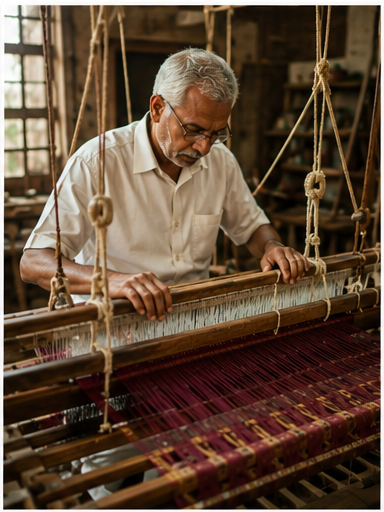
A traditional textile may involve numerous stages before it reaches the customer. The process can include preparing fibres, spinning yarn, dyeing, weaving, embroidering, embellishing, finishing, and carefully inspecting the final piece.
Each stage requires attention.
Each decision affects the final result.
This is why handcrafted fashion has a distinctive character. It carries the human touch of the people who created it.
In an age of mass production, that human connection makes traditional craftsmanship even more meaningful.
The Saree: A Canvas of Heritage
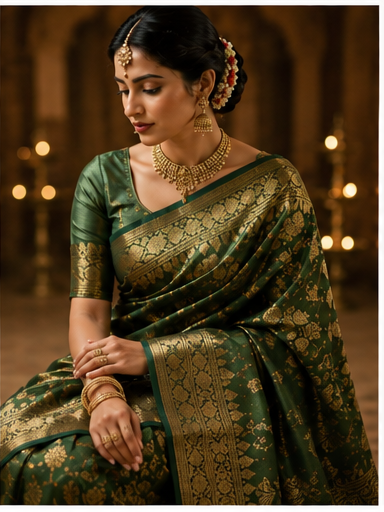
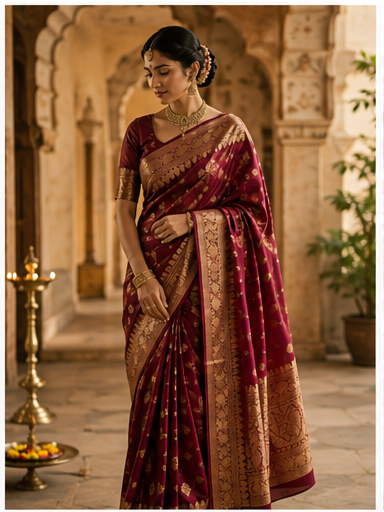
The Indian saree is one of the most recognisable symbols of traditional fashion.
Its simplicity allows it to become a canvas for countless forms of artistic expression.
Different regions have developed distinctive saree traditions, each with its own fabrics, weaving methods, motifs, colours, and cultural significance.
Kanchipuram silk is renowned for its rich silk and traditional zari work. Banarasi sarees are admired for their intricate patterns and luxurious appearance. Paithani sarees are celebrated for their vibrant colours and distinctive motifs, while Chanderi is known for its delicate and lightweight character.
There are countless other traditions, including Ikat, Kalamkari, Jamdani, Maheshwari, Kota Doria, Tussar, and many more.
Each one represents a different chapter in India’s textile story.
When a woman wears a traditional saree, she may be wearing much more than an elegant garment. She may be carrying the artistic identity of an entire region.
The Hands Behind the Heritage
Behind every beautiful handcrafted textile are skilled hands.
Artisans spend years developing the precision required to create intricate patterns and maintain consistency in their work. Their craft is not simply a profession; for many, it is part of a cultural inheritance.
Imagine the patience required to create a detailed border thread by thread.
Imagine repeating a traditional motif hundreds of times.
Imagine learning a technique from a parent or grandparent and eventually teaching it to the next generation.
This is how craftsmanship survives.
The final product may appear effortless, but the knowledge behind it is anything but simple.
When we appreciate a handcrafted saree, we should therefore appreciate not only its appearance but also the human effort behind it.
The Stories Hidden in Motifs
Traditional Indian textiles are filled with motifs.
Peacocks, flowers, paisleys, leaves, birds, temples, vines, geometric patterns, and nature-inspired designs appear across different textile traditions.
These motifs often carry cultural associations and symbolic meanings.
The peacock, for instance, is frequently associated with beauty and grace. Floral motifs can represent nature and prosperity, while temple-inspired patterns can reflect India’s architectural and spiritual heritage.
Even when a customer simply sees a beautiful pattern, there may be centuries of artistic influence behind it.
This is one of the most fascinating aspects of Indian textiles.
A design can be visually beautiful while also carrying cultural meaning.
The Language of Indian Textiles
Indian textiles speak through colour, texture, pattern, and form.
Deep reds, rich maroons, royal blues, emerald greens, mustard yellows, pinks, oranges, ivory, and gold have long played important roles in traditional clothing.
Different combinations create different emotions.
A deep red silk saree can feel regal and celebratory. An ivory handwoven saree can feel understated and sophisticated. A vibrant multicoloured textile can communicate joy and festivity.
Modern ethnic fashion has expanded this language further by introducing softer pastels, neutral palettes, contemporary contrasts, and minimalist designs.
Yet the connection to tradition remains.
This ability to evolve while retaining cultural character is one of the greatest strengths of Indian craftsmanship.
Silk: The Fabric of Celebration
Silk has a special place in Indian ethnic fashion.
Its natural sheen, rich texture, and luxurious appearance have made it a favourite for weddings, festivals, and important celebrations.
Silk sarees can communicate grandeur without requiring excessive embellishment.
Traditional silk weaving traditions across India have produced a remarkable variety of textures and designs.
For many families, a silk saree is more than an item of clothing.
It can become a treasured possession.
A wedding saree may be carefully stored for years and eventually passed to another generation.
This creates a beautiful cycle of heritage.
The garment begins with an artisan, becomes part of someone’s personal story, and may eventually become part of another person’s story.
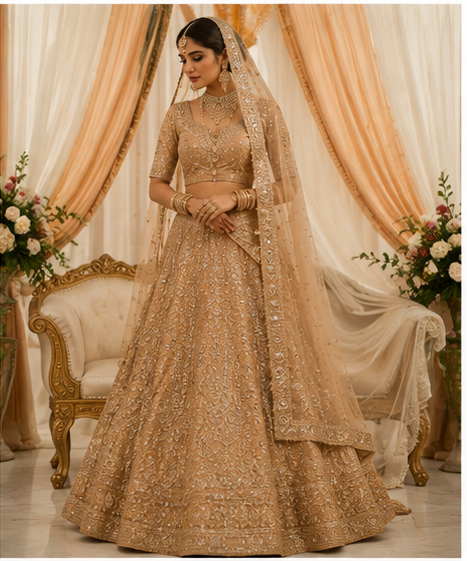
Embroidery: Art in Every Stitch
Weaving is only one aspect of Indian craftsmanship.
Embroidery has also played a major role in the country’s textile traditions.
Different regions have developed their own embroidery techniques, from delicate threadwork to elaborate decorative patterns.
Embroidery can transform a simple garment into a statement piece.
A carefully embroidered neckline, sleeve, border, or pallu can completely change the character of an outfit.
What makes handcrafted embroidery special is the precision involved.
Each stitch contributes to the overall composition.
When viewed closely, the garment becomes almost like a piece of art.
Jewellery as Part of the Heritage Story
Traditional Indian fashion is not limited to textiles.
Jewellery is an important part of the cultural story.
Temple jewellery, gold ornaments, traditional earrings, bangles, necklaces, rings, waist jewellery, and hair accessories have long been used to complement ethnic clothing.
Jewellery can communicate status, occasion, tradition, and personal style.
When paired with the right saree, it can create a complete visual story.
A richly woven silk saree combined with traditional jewellery can create a regal appearance. A simple handwoven saree paired with delicate jewellery can create understated elegance.
The beauty is in the relationship between the pieces.
Craftsmanship and the Modern Woman
Tradition does not have to mean old-fashioned.
Today’s women are redefining how traditional clothing is worn.
Sarees are being paired with contemporary blouses, belts, jackets, statement accessories, and modern footwear. Traditional jewellery is being combined with contemporary outfits. Heritage textiles are being used in new silhouettes.
This evolution is important.
It allows younger generations to connect with traditional craftsmanship in ways that feel natural to their lifestyle.
The goal is not to recreate the past exactly.
The goal is to take inspiration from the past and create something meaningful for the present.
Why Handcrafted Fashion Matters
In a world dominated by mass-produced fashion, handcrafted clothing offers a different experience.
It encourages us to slow down and appreciate how something was made.
A handcrafted garment can have subtle variations that make it unique. These details are reminders of its human origin.
Instead of being one of thousands of identical products, it can feel personal.
This uniqueness is particularly valuable in luxury fashion.
True luxury is not necessarily about excess.
It can be about authenticity, craftsmanship, quality, exclusivity, and meaning.
A garment becomes more valuable when we understand the story behind it.
Preserving Traditional Skills
India’s craftsmanship is a priceless cultural resource, but traditions need continued support to survive.
Artisan communities need sustainable opportunities. Traditional techniques need recognition. Younger generations need reasons to continue learning these skills.
Consumers also have an important role.
When people consciously choose handcrafted and heritage-inspired products, they help create demand for traditional craftsmanship.
Fashion brands can contribute by educating customers about the stories behind their collections and presenting traditional techniques in ways that appeal to modern audiences.
Preservation does not mean keeping craftsmanship unchanged.
It means ensuring that craftsmanship has a future.
The Role of Heritage Fashion Brands
Modern heritage fashion brands can act as bridges between tradition and contemporary luxury.
They can introduce customers to regional textiles, traditional techniques, artisan stories, and cultural motifs while offering designs that fit modern lifestyles.
This is particularly important for younger customers.
They may want clothing that feels contemporary but still connects them to their roots.
A heritage-inspired brand can provide that connection.
At Herytale, we see this opportunity as part of our purpose.
Our goal is to celebrate the richness of Indian craftsmanship while creating a refined fashion experience for today’s customer.
Herytale: Heritage in Every Thread
Herytale was created with a deep appreciation for the beauty of Indian heritage.
Our tagline, “Heritage in Every Thread,” represents more than a brand message. It reflects the philosophy behind our approach to ethnic fashion.
We believe that every garment should carry a sense of story.
Every saree should feel thoughtfully chosen.
Every design should respect the traditions that inspired it.
And every customer should feel that they are wearing something more meaningful than an ordinary fashion piece.
Our vision is to bring together heritage, craftsmanship, luxury, and contemporary elegance.
We believe Indian fashion can be both deeply traditional and beautifully modern.
From Artisan to Wardrobe
One of the most beautiful journeys in fashion is the journey from creation to connection.
An artisan begins with raw materials.
Through skill and patience, those materials become fabric.
Through design, fabric becomes a garment.
Through the customer, the garment becomes part of a story.
A saree may begin on a loom but eventually find itself at a wedding, a festival, a celebration, or a family gathering.
This is what makes clothing meaningful.
The artisan creates the foundation.
The wearer completes the story.
Heritage That Crosses Generations
Perhaps the greatest proof of timeless craftsmanship is its ability to cross generations.
A grandmother may own a saree that her daughter remembers from childhood. That daughter may eventually pass it to her own child.
The garment becomes a physical connection between generations.
It carries memories that cannot be recreated by a new trend.
This is why heirloom clothing is so valuable.
Its worth is not measured only by its fabric or workmanship.
It is measured by the memories it carries.
The Future of Indian Craftsmanship
The future of Indian craftsmanship lies in creating a balance between preservation and innovation.
Traditional techniques must be respected, but they must also find relevance in modern fashion.
Technology can help artisans reach wider audiences. Digital platforms can introduce regional crafts to customers around the world. Contemporary design can create new demand for traditional textiles.
The possibilities are enormous.
Imagine a young woman discovering a centuries-old weaving tradition through a modern fashion collection.
She purchases a saree.
She learns about its craftsmanship.
She begins to appreciate the story behind it.
Perhaps years later, she passes that saree to someone else.
This is how heritage continues.
Not by remaining frozen in the past, but by becoming part of the future.
Choosing Timeless Over Temporary
Modern fashion often encourages constant change.
New trends appear every season, and consumers are encouraged to replace what they already own.
Heritage fashion offers another approach.
Choose pieces that have lasting beauty.
Choose quality over quantity.
Choose craftsmanship over disposable trends.
Choose garments that can become part of your personal story.
A timeless saree may be worn today, styled differently next year, and cherished for decades.
That is the power of thoughtful fashion.
Celebrating the Woman Who Wears It
Ultimately, craftsmanship exists to create something that people can experience.
The artisan creates the garment, but the woman who wears it gives it life.
She brings her personality, confidence, memories, and individuality to the piece.
The same saree can look completely different on two women because each person carries herself differently.
This is what makes fashion personal.
Heritage provides the foundation.
The wearer creates the expression.
Threads That Tell a Story
Every thread has the potential to represent something.
A thread can represent an artisan’s skill.
It can represent a family’s tradition.
It can represent a region’s cultural identity.
It can represent a celebration.
It can represent a memory.
And when thousands of threads come together, they create something much greater than fabric.
They create heritage.
This is why Indian craftsmanship deserves to be celebrated—not simply as a part of fashion, but as a living form of cultural expression.
Conclusion: A Heritage Worth Carrying Forward
India’s timeless craftsmanship is one of the country’s greatest treasures.
From handwoven sarees to intricate embroidery and traditional jewellery, every element reflects the creativity and dedication of generations of artisans.
As fashion continues to evolve, these traditions have the opportunity to reach new audiences and inspire new generations.
The responsibility lies with all of us—to appreciate craftsmanship, understand its stories, support its future, and wear it with pride.
At Herytale, we believe that heritage is not something that belongs only in the past.
It belongs in the present.
It belongs in the future.
And it belongs in the stories we create every day.
Because when we choose a handcrafted saree, an authentic ethnic ensemble, or a beautifully crafted piece of traditional jewellery, we are not simply choosing what to wear.
We are choosing a story.
We are choosing artistry.
We are choosing connection.
And most importantly, we are choosing to keep a beautiful tradition alive.
Herytale — Heritage in Every Thread.
Because some things are not meant to be forgotten.
They are meant to be woven, worn, cherished, and passed on.
Do you sell sarees only or you have other materials?
Thank you for asking!We offer more than just sarees.Our collection includes sarees,kurtis,ethnic wear,designer and temple,and customized outfits.