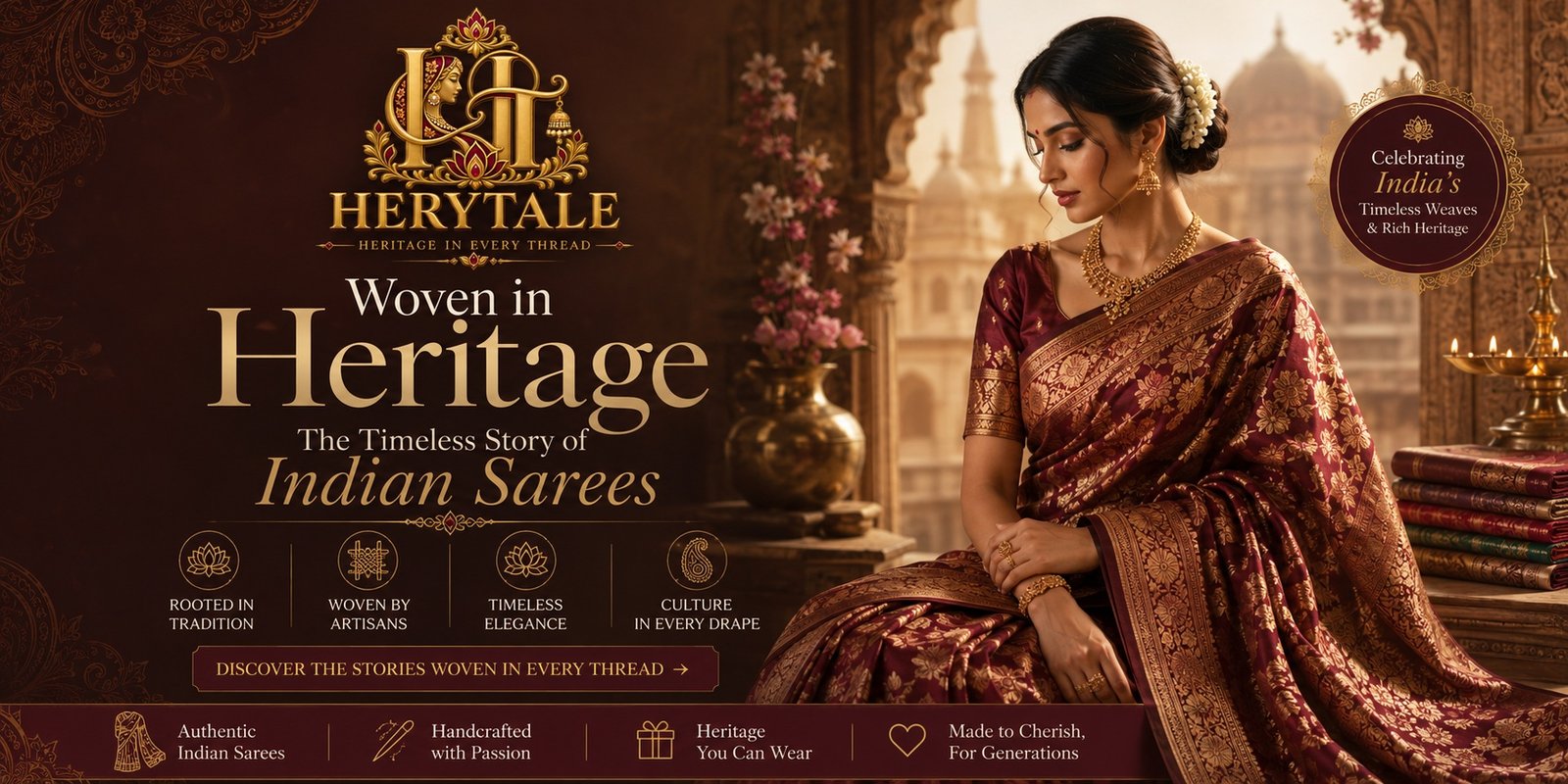
A saree is more than a garment. It is a story woven into fabric, a celebration of craftsmanship, and a beautiful expression of India’s rich cultural heritage. Across generations, the saree has remained one of the most graceful and enduring symbols of Indian tradition. Its elegance lies not only in the way it is draped, but also in the history, artistry, emotions, and skilled hands behind every weave.
At Herytale, we believe that every thread carries a story. Our philosophy, “Heritage in Every Thread,” reflects our appreciation for the traditions that have shaped Indian fashion for centuries. In a world where trends change rapidly, the saree continues to stand apart—timeless, graceful, and deeply connected to the identity of the people who wear it.
The Saree: A Garment Beyond Time
Few garments have the ability to remain relevant across centuries while continuously adapting to changing generations. The saree is one of them.
Its simplicity is remarkable. A long piece of fabric, traditionally worn by wrapping and draping it around the body, can create countless styles and silhouettes. Yet behind this simplicity is an extraordinary world of regional traditions, weaving techniques, motifs, colours, embroidery, and craftsmanship.
From a bride preparing for her wedding to a woman choosing an elegant saree for a festive celebration, the garment often becomes part of some of life’s most meaningful moments.
A saree can carry memories.
It may remind someone of their grandmother, their first festival, their wedding day, a special family celebration, or the first traditional outfit they received as a gift. This emotional connection is one of the reasons the saree has remained so cherished.
A Journey Through India’s Textile Heritage
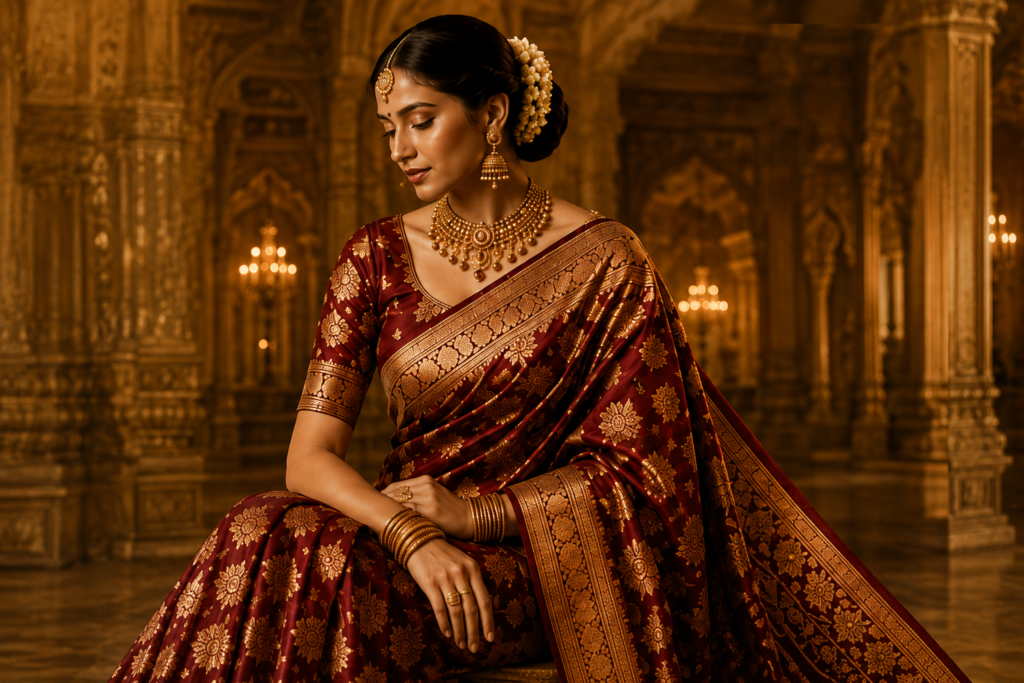
India is home to an extraordinary diversity of textile traditions. Almost every region has developed its own distinctive weaving styles, materials, patterns, colours, and techniques.
The beauty of Indian sarees is that no two traditions tell exactly the same story.
A Kanchipuram silk saree is admired for its rich silk, traditional motifs, and distinctive borders. Banarasi sarees are celebrated for their luxurious appearance and intricate zari work. Chanderi is known for its delicate, lightweight fabric, while Paithani is recognised for its rich colours and artistic motifs.
There are also traditions such as Ikat, Kalamkari, Chikankari, Jamdani, Maheshwari, Kota Doria, and Tussar silk, each representing a different chapter of India’s textile heritage.
These sarees are not simply products created for fashion. They are expressions of regional identity and craftsmanship.
When you wear a traditional Indian saree, you are often carrying a small piece of that region’s cultural story with you.
The Hands Behind Every Thread
The true beauty of a handcrafted saree is found not only in the finished product but also in the process behind it.
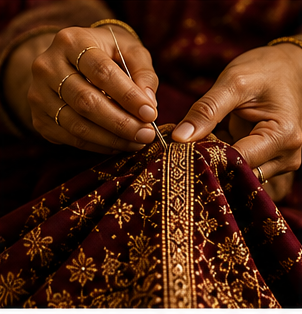
For generations, skilled artisans and weavers have passed techniques from one generation to another. Their knowledge is often developed through years of practice, patience, and observation.
Creating a traditional saree can involve numerous stages, from preparing and dyeing yarn to weaving intricate patterns and finishing the fabric.
Every movement of the artisan matters.
Every thread must be carefully positioned.
Every motif requires precision.
This human involvement gives handcrafted textiles a character that mass-produced fabrics often struggle to reproduce. Small variations in weaving or texture are not imperfections; they can be reminders that the piece was created through human craftsmanship.
That is what makes handcrafted fashion special.
It connects the person wearing the garment with the person who created it.
The Art of Weaving Stories
Indian sarees are famous for their motifs, and these motifs often have cultural significance.
Flowers, leaves, birds, peacocks, paisleys, temples, geometric patterns, traditional symbols, and nature-inspired designs appear across different weaving traditions.
The paisley, for example, has become one of the most recognisable motifs in Indian textiles. Peacock-inspired patterns frequently represent beauty and grace, while floral designs celebrate the connection between Indian craftsmanship and nature.
Borders and pallus also play an important role in saree design. They can transform a simple fabric into something visually striking and give the saree its distinctive personality.
In many traditional sarees, the design is carefully planned so that the border and pallu complement the main body of the fabric.
The result is not merely clothing.
It is composition, artistry, and storytelling woven together.
The Emotional Connection of a Saree
Fashion is often associated with appearance, but traditional clothing carries something deeper: emotion.
A saree can become an heirloom.
A mother may pass her wedding saree to her daughter. A grandmother’s silk saree may be carefully preserved and worn again during a family celebration. A saree purchased for a special occasion can become associated with memories that last for decades.
This emotional value gives sarees a unique place in Indian families.
Unlike fast-changing fashion pieces, a beautiful saree can remain relevant for years. Its meaning can even grow with time.
The fabric may become softer.
The memories may become stronger.
The story may become richer.
And the saree continues to live on.
Sarees in Modern Fashion
While the saree is rooted in tradition, it has never remained stuck in the past.
Modern designers, stylists, and women have continuously experimented with the garment. Contemporary blouses, statement jewellery, belts, modern draping techniques, jackets, capes, and fusion styling have introduced new possibilities.
Today, women wear sarees not only for weddings and festivals but also for celebrations, professional events, cultural occasions, fashion shows, parties, and special evenings.
This ability to evolve is one of the saree’s greatest strengths.
It can be traditional without looking outdated.
It can be luxurious without being excessive.
It can be modern without losing its cultural identity.
The saree does not need to choose between heritage and contemporary fashion. It can beautifully represent both.
Choosing the Right Saree for the Occasion
Selecting a saree is a personal experience. The right choice depends on the occasion, season, personal style, comfort, and desired look.
For weddings, rich silk sarees, intricate zari work, elaborate borders, and luxurious textures can create a regal appearance.
For festive celebrations, colourful sarees with traditional motifs can bring vibrancy and cultural elegance to the look.
For more relaxed occasions, lightweight fabrics can offer comfort while maintaining sophistication.
The most important consideration, however, is how the saree makes you feel.
A truly beautiful saree should not simply look elegant. It should allow the wearer to feel confident, graceful, and connected to her own style.
The Power of Colour
Colour plays a powerful role in Indian ethnic wear.
Deep reds and burgundy tones often create a sense of richness and celebration. Gold brings warmth and luxury. Emerald green, royal blue, magenta, pink, ivory, and earthy tones can each create a completely different mood.
Traditional Indian fashion has never been afraid of colour.
Yet modern styling has also introduced softer neutrals, muted tones, contemporary combinations, and minimalist palettes.
The beauty of saree fashion lies in this freedom.
You can choose a colour that reflects tradition or one that reflects your personality—or find a combination that does both.
Sarees and Jewellery: Completing the Story
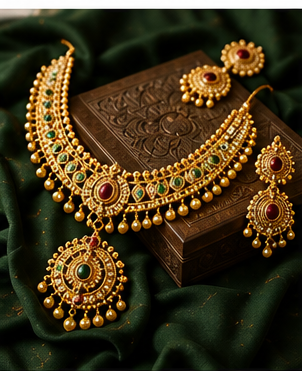
A saree often becomes even more expressive when paired with the right jewellery.
Traditional temple jewellery can create a majestic heritage-inspired appearance. Gold jewellery can enhance the richness of silk sarees, while delicate pieces can create a more understated and contemporary look.
The key is balance.
A heavily detailed saree can be paired with statement jewellery for a dramatic occasion, while a simpler saree may allow jewellery to become the central highlight.
Accessories such as traditional earrings, bangles, necklaces, hair ornaments, and handbags can transform the overall appearance.
Together, the saree and jewellery create a complete expression of personal style.
The Importance of Preserving Craftsmanship
In an increasingly fast-moving fashion industry, preserving traditional craftsmanship has become more important than ever.
Traditional weaving techniques represent generations of knowledge. When consumers choose thoughtfully made ethnic wear, they are not simply purchasing clothing. They are supporting an ecosystem of craftsmanship and helping keep cultural techniques visible and relevant.
The future of heritage fashion depends on creating a bridge between tradition and modern consumers.
Younger generations should not have to choose between cultural identity and contemporary style.
They should be able to experience both.
This is where modern heritage brands have an important role to play: presenting traditional craftsmanship in ways that feel relevant, luxurious, wearable, and meaningful.
The Herytale Philosophy
At Herytale, our vision is inspired by the belief that heritage should not simply be preserved—it should be celebrated and carried forward.
Our name represents a connection between heritage and story. Every collection is an opportunity to celebrate the artistry, elegance, and cultural richness associated with Indian ethnic wear.
We believe luxury is not only about appearance.
True luxury can be found in craftsmanship, authenticity, thoughtful design, quality, and the story behind a piece.
That is why our approach to ethnic fashion is rooted in elegance while remaining connected to tradition.
From sarees to ethnic ensembles and jewellery, every element should feel meaningful, refined, and timeless.
From One Generation to the Next
Perhaps the greatest strength of the saree is its ability to connect generations.
A young woman may discover sarees through social media and contemporary fashion. She may then develop an appreciation for traditional weaving, regional textiles, and craftsmanship.
Years later, that same woman may choose a saree for her wedding.
And one day, she may pass one of her treasured sarees to her daughter.
This is how heritage survives—not simply through museums or history books, but through people who continue to wear, celebrate, and share it.
The saree becomes a bridge between generations.
It carries the past into the present and gives the future something beautiful to inherit.
Why the Saree Will Always Be Timeless
Fashion trends may change every season, but some designs transcend trends.
The saree is one of them.
Its versatility allows it to evolve with changing lifestyles. Its craftsmanship gives it artistic value. Its cultural significance gives it emotional depth. And its ability to complement different personalities ensures that it continues to remain relevant.
A saree can be regal.
It can be minimalist.
It can be traditional.
It can be contemporary.
It can be bold.
It can be delicate.
But above all, it can be uniquely yours.
A Heritage Worth Wearing
The story of the Indian saree is ultimately a story about people.
It is the story of artisans who preserve techniques through generations. It is the story of communities whose identities are reflected in their textiles. It is the story of families who pass treasured garments from one generation to another. And it is the story of women who continue to reinterpret the saree in their own beautiful ways.
Every saree has the potential to become part of someone’s story.
At Herytale, we believe that is what makes heritage fashion truly special.
Heritage is not something that belongs only to the past. It is something we carry, celebrate, and pass forward.
So, the next time you drape a saree, look beyond its colour, weave, and design.
Look at the hands that created it.
Look at the traditions that inspired it.
Look at the generations that helped preserve it.
And remember that every thread carries a story.
Herytale — Heritage in Every Thread
Because when tradition is woven with craftsmanship, elegance, and love, it becomes more than fashion.
It becomes heritage.
Draped in Elegance: The Art of Indian Ethnic Fashion
Indian ethnic fashion is more than clothing. It is a celebration of culture, craftsmanship, identity, and timeless beauty. From the graceful drape of a saree to the intricate details of traditional jewellery, every element carries a story shaped by generations of artistry and tradition.
In a world where fashion trends change quickly, Indian ethnic wear continues to hold a special place. It evolves with time while preserving the essence of heritage. Today, traditional silhouettes are being reimagined with contemporary designs, creating a beautiful connection between the past and the present.
At Herytale, we believe that true elegance comes from this connection. Our philosophy, “Heritage in Every Thread,” reflects our belief that traditional fashion should not simply be preserved—it should be celebrated, experienced, and carried forward.
The Beauty of Indian Ethnic Fashion
Indian ethnic fashion is remarkable because of its diversity.
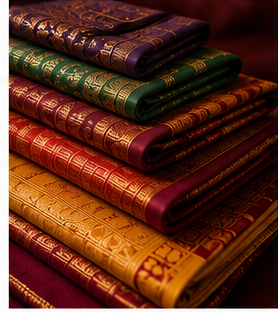
Every region of India has contributed something unique to the country’s textile and fashion heritage. Different communities have developed their own weaving techniques, embroidery styles, motifs, fabrics, colours, and ways of draping garments.
A saree from South India can have a completely different character from one created in North India. A handwoven silk may communicate grandeur and tradition, while a lightweight cotton saree can express simplicity and comfort.
Yet all these traditions share something important: craftsmanship.
Indian ethnic fashion is built around details. Borders, motifs, embroidery, zari, textures, pleats, pallus, embellishments, and handcrafted finishes can transform a simple piece of fabric into an extraordinary garment.
This attention to detail is what gives traditional Indian clothing its distinctive character.
The Saree: An Icon of Elegance
Among India’s many traditional garments, the saree remains one of the most iconic.
Its beauty lies in its versatility. The same six-yard—or longer—piece of fabric can create dramatically different looks depending on the draping style, fabric, blouse, jewellery, and accessories.
A silk saree can create a regal appearance at a wedding. A lightweight saree can offer effortless elegance at a daytime gathering. A richly embellished saree can become the centrepiece of an evening celebration.
The saree also allows personal expression.
Some women prefer classic traditional drapes. Others experiment with contemporary styling, statement blouses, belts, jackets, or modern accessories.
This ability to adapt has helped the saree remain relevant across generations.
It is not simply a traditional garment.
It is a canvas for individual style.
The Art Behind Every Saree
The finished saree may look effortless, but its creation can involve remarkable skill and patience.
Behind many traditional textiles are artisans who have developed their craft through years of practice. Their knowledge can be passed from one generation to another, preserving techniques that might otherwise disappear.
The process of creating textiles may involve selecting fibres, preparing yarn, dyeing, weaving, embellishing, finishing, and carefully inspecting the final fabric.
Handcrafted textiles often have a distinctive character because they are shaped by human hands.
Every detail matters.
The precision of a border, the arrangement of a motif, the balance of colours, and the quality of the fabric all contribute to the final piece.
When you wear a handcrafted garment, you are wearing more than a design.
You are wearing the work of an artisan.
Fabrics That Define Indian Fashion
Fabric plays an important role in determining the personality of an ethnic garment.
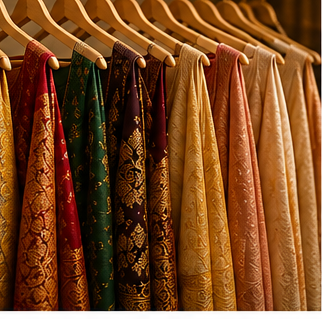
Silk is often associated with luxury, celebration, and grandeur. Its rich texture and natural sheen make it particularly popular for weddings and festive occasions.
Cotton offers comfort, breathability, and understated elegance. It is ideal for everyday ethnic wear and warm climates.
Tussar silk has a distinctive texture and natural appearance, while Chanderi is admired for its lightness and delicate beauty.
Other textile traditions such as Banarasi, Kanchipuram, Paithani, Maheshwari, Kota Doria, Ikat, and Jamdani represent different regional chapters of India’s textile heritage.
Each fabric has its own personality.
Choosing one is therefore not simply about selecting a material. It is about choosing the mood, character, and story you want your outfit to express.
The Language of Colours
Colour is one of the most powerful elements in Indian ethnic fashion.
Traditional Indian clothing has always embraced rich and expressive colours. Deep red, burgundy, royal blue, emerald green, pink, orange, mustard, gold, and purple can create striking and luxurious combinations.
Red is often associated with celebration and auspicious occasions. Gold communicates richness and grandeur. Green can create a fresh and elegant appearance, while deep blue can bring sophistication.
At the same time, contemporary ethnic fashion has expanded the palette.
Ivory, beige, champagne, dusty rose, muted green, pastel blue, and other softer tones have become increasingly popular for modern celebrations.
This combination of traditional and contemporary colour choices allows ethnic fashion to appeal to different personalities and generations.
The Role of Traditional Jewellery
No discussion of Indian ethnic fashion is complete without jewellery.
Jewellery can transform an outfit and enhance its overall character.
Traditional temple jewellery, for example, can create a regal heritage-inspired appearance. Gold jewellery can complement rich silk sarees, while diamonds and contemporary pieces can introduce a modern sense of luxury.
Earrings, necklaces, bangles, rings, maang tikas, waist belts, and other accessories can each contribute to the final look.
However, elegance often comes from balance.
A heavily embellished saree may need only a few carefully chosen accessories. A simpler saree can allow statement jewellery to take centre stage.
The objective is not to wear everything at once.
The objective is to create harmony.
Ethnic Fashion for Weddings
Indian weddings are perhaps one of the most important occasions for ethnic fashion.
Wedding clothing is deeply connected to family traditions, celebrations, rituals, and memories.
Bridal sarees, lehengas, embroidered outfits, traditional jewellery, and richly decorated fabrics allow women to express both personal style and cultural identity.
For brides, choosing an outfit can become an emotional experience.
The colour, fabric, embroidery, jewellery, and silhouette all contribute to creating a look that may be remembered for a lifetime.
For wedding guests, ethnic fashion provides an opportunity to celebrate the occasion while expressing individual elegance.
Rich sarees, elegant kurtas, embroidered ensembles, and sophisticated accessories can create a polished festive appearance.
Modern Women, Modern Ethnic Wear
Today’s woman does not necessarily want to choose between traditional fashion and modern style.
She wants both.
This has led to the rise of contemporary ethnic fashion.
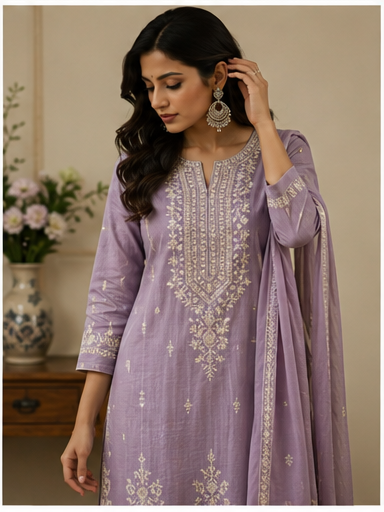
Traditional fabrics are being combined with modern silhouettes. Classic sarees are being paired with statement blouses. Ethnic jewellery is being styled with contemporary outfits. Traditional embroidery is appearing on modern cuts and designs.
This evolution is important because fashion survives when it remains relevant.
Tradition does not have to mean repetition.
Instead, tradition can become inspiration.
Modern designers and fashion brands have the opportunity to take elements from India’s cultural heritage and reinterpret them for today’s lifestyle without losing their essence.
Styling Indian Ethnic Wear
Styling can completely transform the appearance of an ethnic outfit.
A saree can be styled in a classic drape for a traditional look or paired with a contemporary blouse for a more modern appearance.
Jewellery can determine whether the final look feels royal, minimal, festive, or contemporary.
Footwear also matters. Traditional sandals can create a classic appearance, while elegant heels can add a modern touch.
A carefully chosen handbag, clutch, hair accessory, or shawl can complete the outfit.
The secret is to understand the personality of the garment.
Instead of adding more and more elements, choose pieces that complement one another.
True elegance is often created through balance.
Heritage and Sustainability
Traditional craftsmanship also has an important place in the conversation around responsible fashion.
Fast fashion encourages constant consumption and short-lived trends. Heritage textiles offer another perspective: choosing garments that are meaningful, well-crafted, and designed to remain beautiful over time.
A carefully made saree can be worn repeatedly for different occasions and, in many cases, passed from one generation to another.
This creates a more emotional relationship with clothing.
Instead of asking, “What is trending today?” we can also ask:
“Will I still love this piece years from now?”
Timeless design encourages us to value quality, craftsmanship, and longevity.
Preserving the Art of Indian Craftsmanship
Indian textile traditions represent centuries of knowledge.
But traditions can only survive when there is a future for the people who practise them.
Supporting artisans, valuing handcrafted products, educating consumers about textile traditions, and creating modern demand for heritage-inspired clothing can all contribute to keeping craftsmanship alive.
This is where brands have a responsibility.
A modern ethnic fashion brand can serve as a bridge between artisans and contemporary customers.
It can introduce traditional craftsmanship to new audiences while presenting it through modern, luxurious, and relevant collections.
Preserving heritage does not mean freezing it in time.
It means giving it a future.
Herytale: Where Heritage Meets Elegance
At Herytale, our approach to fashion begins with respect for India’s cultural richness.
Our philosophy, “Heritage in Every Thread,” represents the belief that clothing can be beautiful while also being meaningful.
We envision ethnic fashion as an experience rather than simply a purchase.
Every saree, ensemble, and accessory should have a sense of character. It should reflect craftsmanship, elegance, and the richness of Indian heritage while allowing the wearer to express her own personality.
For us, luxury is not only about how something looks.
Luxury is also about how it feels.
It is found in thoughtful design, quality materials, skilled craftsmanship, refined presentation, and the story behind the piece.
This is the spirit we want Herytale to represent.
The New Era of Indian Ethnic Fashion
Indian ethnic fashion is entering an exciting new era.
Digital platforms have made it possible for customers around the world to discover regional textiles and traditional crafts. Younger generations are exploring sarees and ethnic wear in new ways. Designers are experimenting with silhouettes, fabrics, colours, and styling.
Social media has also transformed the way people discover fashion.
A traditional saree can now inspire a global audience within minutes.
This creates an opportunity to introduce Indian craftsmanship to people who may never have experienced it before.
The challenge is to embrace innovation without losing authenticity.
The future of ethnic fashion should not be about abandoning tradition.
It should be about interpreting tradition thoughtfully.
Elegance That Transcends Trends
Trends come and go.
But elegance has a longer life.
A beautifully woven saree does not become irrelevant simply because a new fashion trend appears. A handcrafted piece can remain meaningful because its value is not based solely on popularity.
Its value comes from craftsmanship.
Its value comes from its story.
Its value comes from the emotions attached to it.
This is why ethnic fashion continues to occupy such an important place in Indian culture.
It gives us the freedom to celebrate where we come from while expressing who we are today.
The Emotional Power of Clothing
Clothing can become part of our memories.
We remember what we wore when we celebrated important moments. We remember the saree our mother wore at a family celebration. We remember the outfit we chose for our first major occasion.
These memories give clothing emotional value.
An ethnic garment can become more than something stored in a wardrobe.
It can become an heirloom.
A reminder.
A story.
A connection between generations.
This emotional dimension is what makes traditional fashion so powerful.
Celebrating Your Own Heritage
Indian ethnic fashion is not about following one fixed definition of tradition.
It is about discovering what heritage means to you.
For one person, it may be a traditional silk saree inherited from her grandmother.
For another, it may be a contemporary saree inspired by regional motifs.
For someone else, it may be a piece of traditional jewellery worn with a modern outfit.
There is no single way to celebrate heritage.
The beauty lies in making it your own.
Conclusion: Draped in Elegance
Indian ethnic fashion is a celebration of everything that makes tradition beautiful—craftsmanship, culture, colour, artistry, emotion, and identity.
The saree, with its timeless elegance, remains one of the most powerful expressions of this heritage. But ethnic fashion extends far beyond one garment. It includes textiles, embroidery, jewellery, silhouettes, craftsmanship, and the countless stories passed from one generation to another.
As modern fashion continues to evolve, Indian ethnic wear has the opportunity to become even more relevant.
The future is not about choosing between tradition and modernity.
It is about bringing them together.
At Herytale, we believe that every woman deserves to experience fashion that feels beautiful, meaningful, and timeless.
Because when heritage is thoughtfully transformed into fashion, it becomes more than clothing.
It becomes an expression of identity.
It becomes a celebration of craftsmanship.
It becomes a connection between generations.
And above all, it becomes elegance woven into every thread.
Herytale — Heritage in Every Thread.